


Fortinet FortiGate VM08v
Consistent Security for Cloud and Virtualized Environments
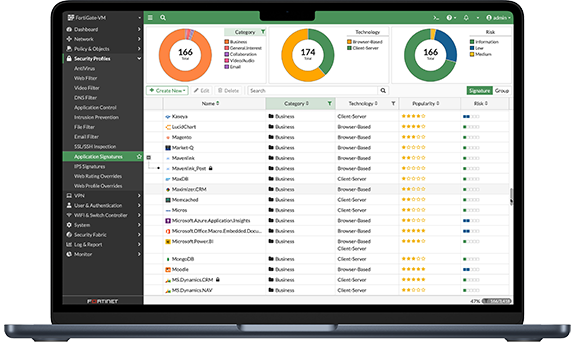
Fortinet Products
FortiGate-VM08V Enterprise Protection (IPS, DLP, AMP, Antispam, AI-Based Malware Prevention, Application Control, URL/DNS/Video Filtering, FortiConverter, IoT Security, Security Rating, and FortiCare Premium)
FortiGate-VM08V 1 Year Enterprise Protection (IPS, DLP, AMP, Antispam, AI-Based Malware Prevention, Application Control, URL/DNS/Video Filtering, FortiConverter, IoT Security, Security Rating, and FortiCare Premium)
#FC-10-FG8VM-812-02-12
List Price:$10,730.40
Our Price: $9,266.77
List Price:
Our Price: $9,266.77
FortiGate-VM08V Unified Threat Protection (UTP) (IPS, Advanced Malware Protection, Application Control, URL, DNS & Video Filtering, Antispam Service, and FortiCare Premium)
FortiGate-VM08V 1 Year Unified Threat Protection (UTP) (IPS, Advanced Malware Protection, Application Control, URL, DNS & Video Filtering, Antispam Service, and FortiCare Premium)
#FC-10-FG8VM-963-02-12
List Price:$8,836.80
Our Price: $7,631.46
List Price:
Our Price: $7,631.46
FortiGate-VM08V FortiGate Cloud Standard Subscription, includes Management, Analysis and Log Retention
FortiGate-VM08V 1 Year FortiGate Cloud Standard Subscription, includes Management, Analysis and 1 Year Log Retention
#FC-10-FG8VM-131-02-12
List Price:$2,524.80
Our Price: $2,180.42
List Price:
Our Price: $2,180.42
FortiGate-VM08V Advanced Malware Protection (AMP) including Antivirus, Mobile Malware and FortiGate Cloud Sandbox Service
FortiGate-VM08V 1 Year Advanced Malware Protection (AMP) including Antivirus, Mobile Malware and FortiGate Cloud Sandbox Service
#FC-10-FG8VM-100-02-12
List Price:$2,524.80
Our Price: $1,868.86
List Price:
Our Price: $1,868.86
Click here to jump to more pricing!

Overview:
Consistent Security for Cloud and Virtualized Environments
Fortinet FortiGate VM is a cloud firewall that provides robust, consistent security across cloud and hybrid environments. By consolidating security tools into a single platform, it optimizes your security investment while improving threat response.
FortiGate VM delivers exceptional performance and security with no degradation of service or protection. As part of the Fortinet Security Fabric, it extends across clouds and distributed locations, mitigating blind spots in virtual infrastructures. FortiGate VM can be rapidly deployed, managed through a centralized platform, and offers a range of purchasing options to suit every need.
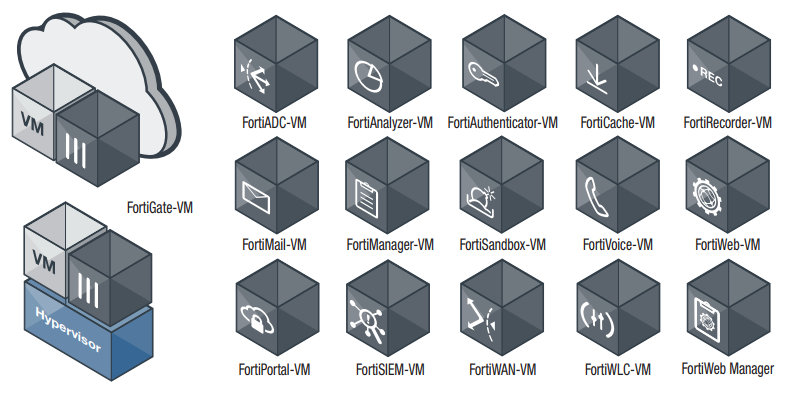
Highlights
- Protection from a broad array of threats, with support for all of the security and networking services that the FortiOS operating system offers
- Increased visibility within virtualized infrastructure monitoring
- Consistent security with central management across your entire compute infrastructure
- Move and scale your cloud firewalls without impacting business outcomes, with flexible consumption models
Pricing Notes:
- Hardware plus FortiCare Premium and FortiGuard Enterprise Protection
Hardware Unit, FortiCare Premium Ticket Handling, Advanced Hardware Replacement (NBD), Firmware and General Upgrades, Enterprise Services Bundle (IPS, AI-based Inline Malware Prevention, Advanced Malware Protection, Inline CASB Database, Data Loss Prevention, Application Control, URL, DNS & Video Filtering, Antispam, Attack Surface Security, and FortiConverter Service) plus term of contract - Hardware plus FortiCare Premium and FortiGuard Unified Threat Protection (UTP)
Hardware Unit, FortiCare Premium Ticket Handling, Advanced Hardware Replacement (NBD), Firmware and General Upgrades, UTP Services Bundle (IPS, AV, Botnet IP/Domain, Mobile Malware, FortiGate Cloud Sandbox including Virus Outbreak and Content Disarm & Reconstruct, Application Control, URL, DNS & Video Filtering and Antispam Service) plus term of contract - Enterprise Protection (IPS, AI-based Inline Malware Prevention, Inline CASB Database, DLP, App Control, Adv Malware Protection, URL/DNS/Video Filtering, Anti-spam, Attack Surface Security, Converter Svc, FortiCare Premium)
FortiCare Premium Ticket Handling, Advanced Hardware Replacement (NBD), Firmware and General Upgrades, Enterprise Services Bundle (IPS, AI-based Inline Malware Prevention, Advanced Malware Protection, Inline CASB Database, Data Loss Prevention, Application Control, URL, DNS & Video Filtering, Antispam, Attack Surface Security, and FortiConverter Service) - Unified Threat Protection (UTP) (IPS, Advanced Malware Protection, Application Control, URL, DNS & Video Filtering, Antispam Service, and FortiCare Premium)
FortiCare Premium Ticket Handling, Advanced Hardware Replacement (NBD), Firmware and General Upgrades, UTP Services Bundle (IPS, AV, Botnet IP/Domain, Mobile Malware, FortiGate Cloud Sandbox including Virus Outbreak and Content Disarm & Reconstruct, Application Control, URL, DNS & Video Filtering and Antispam Service) - Advanced Threat Protection (IPS, Advanced Malware Protection Service, Application Control, and FortiCare Premium)
FortiCare Premium Ticket Handling, Advanced Hardware Replacement (NBD), Firmware and General Upgrades, Advanced Threat Protection Bundle (IPS, AV, Botnet IP/Domain, Mobile Malware, FortiGate Cloud Sandbox including Virus Outbreak and Content Disarm & Reconstruct Service, Application Control) - FortiCare Essential Support
FortiCare Essential Ticket Handling, Hardware Replacement, Firmware and General Upgrades, Application Control - FortiCare Premium Support
FortiCare Premium Ticket Handling, Advanced Hardware Replacement (NBD), Firmware and General Upgrades, Application Control - FortiCare Elite Support
FortiCare Premium Support with FortiCare Elite Ticket Handling. - Prices are for one year of Premium RMA support. Usual discounts can be applied.
- Annual contracts only. No multi-year SKUs are available for these services.
- Contact Fortinet Renewals team for upgrade quotations for existing FortiCare contracts.
- Pricing and product availability subject to change without notice.
Fortinet Products
FortiGate-VM08V Enterprise Protection (IPS, DLP, AMP, Antispam, AI-Based Malware Prevention, Application Control, URL/DNS/Video Filtering, FortiConverter, IoT Security, Security Rating, and FortiCare Premium)
FortiGate-VM08V 1 Year Enterprise Protection (IPS, DLP, AMP, Antispam, AI-Based Malware Prevention, Application Control, URL/DNS/Video Filtering, FortiConverter, IoT Security, Security Rating, and FortiCare Premium)
#FC-10-FG8VM-812-02-12
List Price:$10,730.40
Our Price: $9,266.77
List Price:
Our Price: $9,266.77
FortiGate-VM08V Unified Threat Protection (UTP) (IPS, Advanced Malware Protection, Application Control, URL, DNS & Video Filtering, Antispam Service, and FortiCare Premium)
FortiGate-VM08V 1 Year Unified Threat Protection (UTP) (IPS, Advanced Malware Protection, Application Control, URL, DNS & Video Filtering, Antispam Service, and FortiCare Premium)
#FC-10-FG8VM-963-02-12
List Price:$8,836.80
Our Price: $7,631.46
List Price:
Our Price: $7,631.46
FortiGate-VM08V FortiGate Cloud Standard Subscription, includes Management, Analysis and Log Retention
FortiGate-VM08V 1 Year FortiGate Cloud Standard Subscription, includes Management, Analysis and 1 Year Log Retention
#FC-10-FG8VM-131-02-12
List Price:$2,524.80
Our Price: $2,180.42
List Price:
Our Price: $2,180.42
FortiGate-VM08V Advanced Malware Protection (AMP) including Antivirus, Mobile Malware and FortiGate Cloud Sandbox Service
FortiGate-VM08V 1 Year Advanced Malware Protection (AMP) including Antivirus, Mobile Malware and FortiGate Cloud Sandbox Service
#FC-10-FG8VM-100-02-12
List Price:$2,524.80
Our Price: $1,868.86
List Price:
Our Price: $1,868.86
FortiGate-VM08V FortiGuard AI-based Inline Malware Prevention Service
FortiGate-VM08V 1 Year FortiGuard AI-based Inline Malware Prevention Service
#FC-10-FG8VM-577-02-12
List Price:$3,787.20
Our Price: $3,270.63
List Price:
Our Price: $3,270.63
FortiGate-VM08V FortiGuard IPS Service
FortiGate-VM08V 1 Year FortiGuard IPS Service
#FC-10-FG8VM-108-02-12
List Price:$2,524.80
Our Price: $1,868.86
List Price:
Our Price: $1,868.86
FortiGate-VM08V FortiGuard URL, DNS & Video Filtering Service
FortiGate-VM08V 1 Year FortiGuard URL, DNS & Video Filtering Service
#FC-10-FG8VM-112-02-12
List Price:$3,787.20
Our Price: $2,803.29
List Price:
Our Price: $2,803.29
FortiGate-VM08V FortiGuard OT Security Service (OT dashboards and compliance reports, OT application and service detection, OT vulnerability correlation, OT virtual patching, OT signatures - Application Control and IPS rules)
FortiGate-VM08V 1 Year FortiGuard OT Security Service (OT dashboards and compliance reports, OT application and service detection, OT vulnerability correlation, OT virtual patching, OT signatures - Application Control and IPS rules)
#FC-10-FG8VM-159-02-12
List Price:$2,524.80
Our Price: $1,868.86
List Price:
Our Price: $1,868.86
FortiGate-VM08V FortiGuard Attack Surface Security Service (Security, Compliance and Risk Ratings, IoT Detection and IoT Vulnerability Correlation)
FortiGate-VM08V 1 Year FortiGuard Attack Surface Security Service (Security, Compliance and Risk Ratings, IoT Detection and IoT Vulnerability Correlation)
#FC-10-FG8VM-175-02-12
List Price:$2,524.80
Our Price: $1,868.86
List Price:
Our Price: $1,868.86
FortiGate-VM08V SDWAN Underlay and Application Monitoring
FortiGate-VM08V 1 Year SDWAN Underlay and Application Monitoring
#FC-10-FG8VM-288-02-12
List Price:$2,524.80
Our Price: $2,180.42
List Price:
Our Price: $2,180.42
FortiGate-VM08V FortiGuard Data Loss Prevention Service
FortiGate-VM08V 1 Year FortiGuard Data Loss Prevention Service
#FC-10-FG8VM-589-02-12
List Price:$2,524.80
Our Price: $1,868.86
List Price:
Our Price: $1,868.86
FortiGate-VM08V FortiAnalyzer Cloud: cloud-Based central logging & analytics. Include All FortiGate log types, IOC Service, Security Automation Service and FortiGuard Outbreak Detection Service.
FortiGate-VM08V 1 Year FortiAnalyzer Cloud: cloud-Based central logging & analytics. Include All FortiGate log types, IOC Service, Security Automation Service and FortiGuard Outbreak Detection Service.
#FC-10-FG8VM-585-02-12
List Price:$3,787.20
Our Price: $3,270.63
List Price:
Our Price: $3,270.63
FortiGate-VM08V SOCaaS: 24x7 cloud-based managed log monitoring, incident triage and SOC escalation service
FortiGate-VM08V 1 Year SOCaaS: 24x7 cloud-based managed log monitoring, incident triage and SOC escalation service
#FC-10-FG8VM-464-02-12
List Price:$7,258.80
Our Price: $6,268.70
List Price:
Our Price: $6,268.70
FortiGate-VM08V Managed FortiGate service, available 24x7, with Fortinet NOC experts performing device setup, network, and policy change management
FortiGate-VM08V 1 Year Managed FortiGate service, available 24x7, with Fortinet NOC experts performing device setup, network, and policy change management
#FC-10-FG8VM-660-02-12
List Price:$5,156.00
Our Price: $4,452.72
List Price:
Our Price: $4,452.72
FortiGate-VM08V FortiSASE Secure Private Access connector license for SD-WAN
FortiGate-VM08V 1 Year FortiSASE Secure Private Access connector license for SD-WAN
#FC-10-FG8VM-662-02-12
List Price:$2,524.80
Our Price: $2,180.42
List Price:
Our Price: $2,180.42
FortiGate-VM08V FortiConverter Service for one time configuration conversion service
FortiGate-VM08V 1 Year FortiConverter Service for one time configuration conversion service
#FC-10-FG8VM-189-02-12
List Price:$631.20
Our Price: $545.10
List Price:
Our Price: $545.10
FortiGate-VM08V FortiCare Premium Support
FortiGate-VM08V 1 Year FortiCare Premium Support
#FC-10-FG8VM-248-02-12
List Price:$2,524.80
Our Price: $2,180.42
List Price:
Our Price: $2,180.42
FortiGate-VM08V FortiCare Elite Support
FortiGate-VM08V 1 Year FortiCare Elite Support
#FC-10-FG8VM-285-02-12
List Price:$3,156.00
Our Price: $2,725.52
List Price:
Our Price: $2,725.52
FortiGate-VM08V Advanced Threat Protection (IPS, Advanced Malware Protection Service, Application Control, and FortiCare Premium)
FortiGate-VM08V 1 Year Advanced Threat Protection (IPS, Advanced Malware Protection Service, Application Control, and FortiCare Premium)
#FC-10-FG8VM-929-02-12
List Price:$5,680.80
Our Price: $4,905.94
List Price:
Our Price: $4,905.94
FortiGate-VM08V Upgrade FortiCare Premium to Elite (Require FortiCare Premium)
FortiGate-VM08V 1 Year Upgrade FortiCare Premium to Elite (Require FortiCare Premium)
#FC-10-FG8VM-204-02-12
List Price:$631.20
Our Price: $545.10
List Price:
Our Price: $545.10